 12 November 2025

AI Tool/Agent Testing Via Crowdsourced Testing: A Complete Guide
27 November 2025
 10:10 MIN READ
  BY
SRIYALINI
BY
SRIYALINI
From an experimental idea, artificial intelligence has quickly developed into a fundamental component of contemporary software ecosystems. AI technologies and intelligent agents are currently used by businesses in a huge range of sectors, mainly for automation, decision-making, customer service, analytics, content creation, cybersecurity monitoring and several other business tasks. Expectations regarding dependability, accuracy, and safety have reached high levels as these AI systems become more autonomous and enter delicate operational contexts.
However, unlike traditional software systems with predictable rule-based outputs, AI applications operate with dynamic learning capabilities, constantly changing behaviors and complex decision logic influenced by massive datasets. These characteristics demand far more rigorous and specialized testing approaches. If inadequately validated, AI tools can produce incorrect results, amplify bias, malfunction in real-world environments, or fail when exposed to unexpected user behavior, all of which can damage user trust and business performance.
To build dependable AI products, companies must invest in advanced AI tool testing practices that simulate diverse real-world usage and ensure performance consistency across conditions. This has led to the rising adoption of crowdsourced testing models, where expert testers from multiple regions provide real-environment feedback and uncover issues that internal QA teams might overlook. Crowdsourced QA has become one of the most important solutions in validating AI behavior at scale, ensuring accuracy, fairness and usability.
Why AI Tools And Agents Need Specialized Testing
AI tools and agents differ from traditional systems in how they learn, adapt, and respond. They do not follow fixed output logic. Instead, they process vast data inputs to generate predictions or actions. These factors introduce unique challenges that require specialized evaluation rather than relying solely on standard test cases.
Dynamic Learning And Continuous Evolution
AI systems evolve over time based on new training datasets, user interactions and feedback loops. This continuous learning means an AI agent that performs well today may behave differently tomorrow. Traditional testing approaches based on static test cases cannot capture the entire range of output variability. AI testing must continuously validate model updates, monitor shifts in performance, and detect regressions or unintended changes.
Unpredictable Decision Paths
AI decision-making can be opaque, involving thousands of neural network weights or probabilistic reasoning. Outputs may differ subtly based on environment or data context, and unpredictable behavior may surface under rare scenarios. Standard QA techniques are insufficient for evaluating such complexity, making real-world exposure essential.
Bias And Ethical Concerns
AI models may inherit biases from training datasets, leading to unfair or discriminatory outcomes. Detecting bias requires diverse testing inputs from varied demographic and cultural perspectives, something internal QA teams alone cannot simulate effectively. Robust AI agent validation must ensure fairness, inclusivity, and unbiased responses.
Context-Based Behavior
AI tools respond to contextual variations like tone, intent, language style, and regional formatting. Traditional testing rarely captures the full scope of possible user scenarios. Testing AI tools demands language variation, environmental variance, real devices and diverse behavioral inputs.
Need For Explainability And Trust
Users expect transparency from intelligent systems. QA teams must validate whether AI agents provide logical, comprehensible, and consistent explanations for their outputs. This requirement introduces another layer of testing complexity involving not just accuracy but also reasoning clarity.
Because of these challenges, traditional testing methodologies, centered on predetermined scripts and controlled lab conditions, fall short. AI tool testing requires tailored strategies incorporating real user variability, continuous monitoring, adversarial testing and human intelligence evaluation.
How Crowdsourced Testing Helps AI Tool Testing
Crowdsourced testing solves many of the limitations inherent in conventional AI testing approaches. By leveraging a distributed community of testers across countries, languages, professions, and device types, organizations can validate how AI systems behave under authentic usage conditions.
Real-World Scenario Simulation
Crowd testing replicates diverse real-world interactions that AI tools are likely to encounter in production. Testers provide variations in language, tone, environment, input format, device model, network condition, and cultural expectations—conditions otherwise difficult to recreate in controlled lab environments.
Exposure To Diverse Data And Use Cases
AI performance depends heavily on the quality and range of input data. Crowdsourced QA helps reveal blind spots and edge cases by generating broad and varied datasets. This process identifies gaps in training data, weakness in model generalization, and failure points in unpredictable situations.
Faster Feedback Loops
Global testers work around the clock, reducing testing cycles and accelerating release readiness. Rapid, multi-time-zone participation enables AI tools to undergo iterative improvement quickly, which is critical in highly competitive markets.
Uncovering Hidden Bugs And Functional Errors
Crowd testers often approach software differently than internal engineers, discovering unique usability flaws, unexpected outcomes, performance bottlenecks, or incorrect logic processing. This enhances AI tool testing accuracy and strengthens product reliability.
Behavior Validation And Ethical Assurance
Crowdsourced testing helps evaluate fairness, bias, accessibility, inclusivity, and sentiment accuracy from multiple demographic viewpoints. AI tools designed for global usage must respond consistently across cultures, and crowd testing is uniquely positioned to validate this requirement.
Enhanced Performance And Scalability Testing
Crowd testing environments provide realistic stress conditions—multiple concurrent users, fluctuating network quality, and varied hardware systems—to assess performance tolerance and ensure smooth user experience at scale.
Through these advantages, crowd testing enhances software quality assurance and supports deep AI agent validation beyond what traditional QA methods deliver.
Testvox AI Tool Testing Service
Among leading companies providing specialized crowdsourced QA for AI systems, Testvox has established itself as a reliable partner for validating AI tools, intelligent agents, and automation platforms. With extensive expertise across functional testing, automation frameworks, security validation, and performance assessments, Testvox supports organizations in building dependable AI solutions that deliver consistent real-world performance.
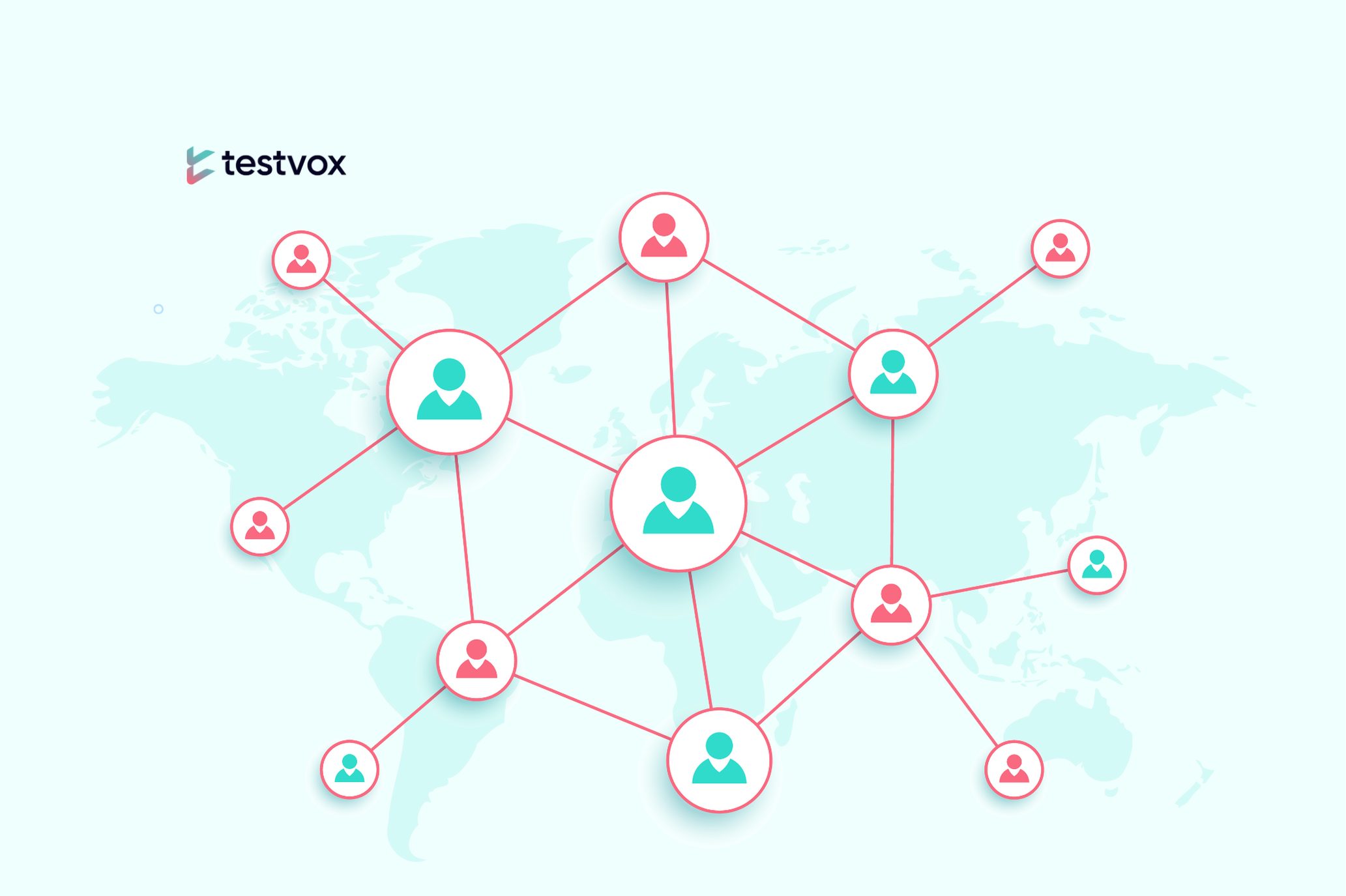
Testvox operates through a global community of experienced testers who provide multi-country verification of AI behaviors across different regions, devices, and environments. This model ensures that AI systems are validated not only in controlled settings but also under actual end-user conditions, capturing true interaction patterns and usage diversity.
Key Strengths Of Testvox In AI Tool Testing
Global Tester Network & Multi-Geography Validation
Testvox engages distributed testers from various countries and cultural backgrounds to evaluate AI performance thoroughly. This approach is invaluable for AI agents handling natural language processing, voice recognition, sentiment analysis, and personalized recommendations.
Comprehensive Test Coverage
Testvox supports a full spectrum of testing services, including functional testing, automation testing, regression testing, security assessments, and performance benchmarking. This holistic QA ecosystem ensures AI tools run reliably and securely across all usage scenarios.
Detailed Bug Reporting And Structured Feedback
Testvox provides rich defect reports, complete with replication steps, environment details, media evidence, severity ranking, and improvement suggestions. These insights accelerate resolution and strengthen product iteration cycles.
Agile Communication And Seamless Collaboration
Customers can work closely with Testvox QA teams through real-time collaboration channels, rapid feedback review, and flexible delivery schedules aligned with agile development processes. This makes iterative improvements faster and more effective.
Validation For AI-Driven Functionality
The Testvox crowd testing model helps validate reasoning consistency, natural language accuracy, personalization precision, and real-world handling of complex interaction flows, key pillars for trustworthy AI adoption.
Through these capabilities, Testvox’s service empowers companies to deploy AI systems confidently, knowing they have been evaluated against diverse input scenarios, unbiased user perspectives, and authentic usage conditions.
Conclusion
The development of artificial intelligence is more closely tied to the future of commercial innovation. However, in order for AI tools and intelligent agents to reach their full potential, they must go through extremely specialized testing that guarantees accuracy, fairness, dependability and ethical behavior under real-world constraints.
The dynamic learning capabilities and unexpected behavior of AI cannot be assessed using conventional software testing methodologies. By enlisting international testers to identify hidden problems, enhance decision quality and verify performance across environments, crowdsourced testing closes this gap.
This is where our Testvox stands out as a trusted partner. With expert crowd testing powered by diverse real-world perspectives, comprehensive QA services, and fast feedback loops, Testvox enables organizations to build AI solutions that users can trust. From functional validation to bug reporting and agile iteration, Testvox equips businesses to confidently scale AI applications and deliver exceptional experiences.
Organizations developing AI tools or intelligent agents who want dependable performance, unbiased results and reliable deployment should consider Testvox for professional AI tool testing services. Partnering with Testvox ensures that AI solutions enter the market thoroughly validated, user-ready and positioned for long-term success.
Get in touch with the Testvox team for information on how Testvox can improve the quality and dependability of your AI applications and maximize the potential of professional worldwide crowd testing for AI tool and agent validation.

12 November 2025
 12 November 2025
 12 November 2025

ABOUT TESTVOX

Testvox is a software testing company help your product reach its full potential. Get full cycle testing for your mobile and web applications while ensuring all quality assurance standards are met... Read More
100+
Applications
Assured
Assured

5 Star Rating

5 Star Rating
“By participating in our release lifecycle, Testvox's standard QA process has helped us to launch quality products faster.”

Rima Hudaifa
Manager | Cadvil
Manager | Cadvil