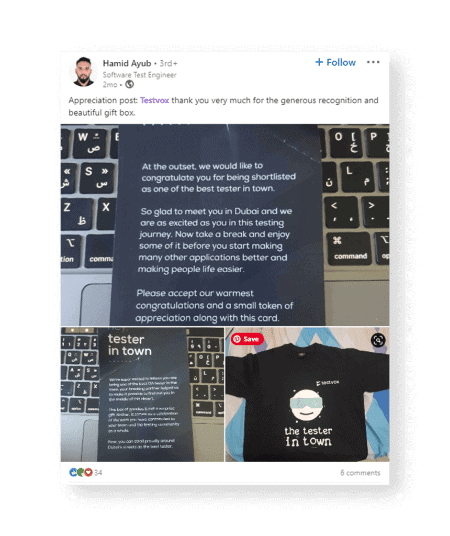
Feel free to see what our customer have to say about our partnership - From Cadvil Dubai, UAE
CASE STUDIES
Software Testers from Testvox tested the court booking and tournaments scheduling app from Cadvil used for booking padel courts all over UAE in iOS and Android based systems.
How Functional Testing Service from Testvox helped to clear the challenges faced by the leading E-commerce company Northladder after modifications and improvements on their application software.
A document management application software integrable with Microsoft 365 and Sharepoint was released on time by Fotopia utilizing the software testing services from Testvox.
The timely completion of Testing Robotic Process Automation of DMS and its workflow by RPA Testers from Testvox helped a client in implementing a project using bots.
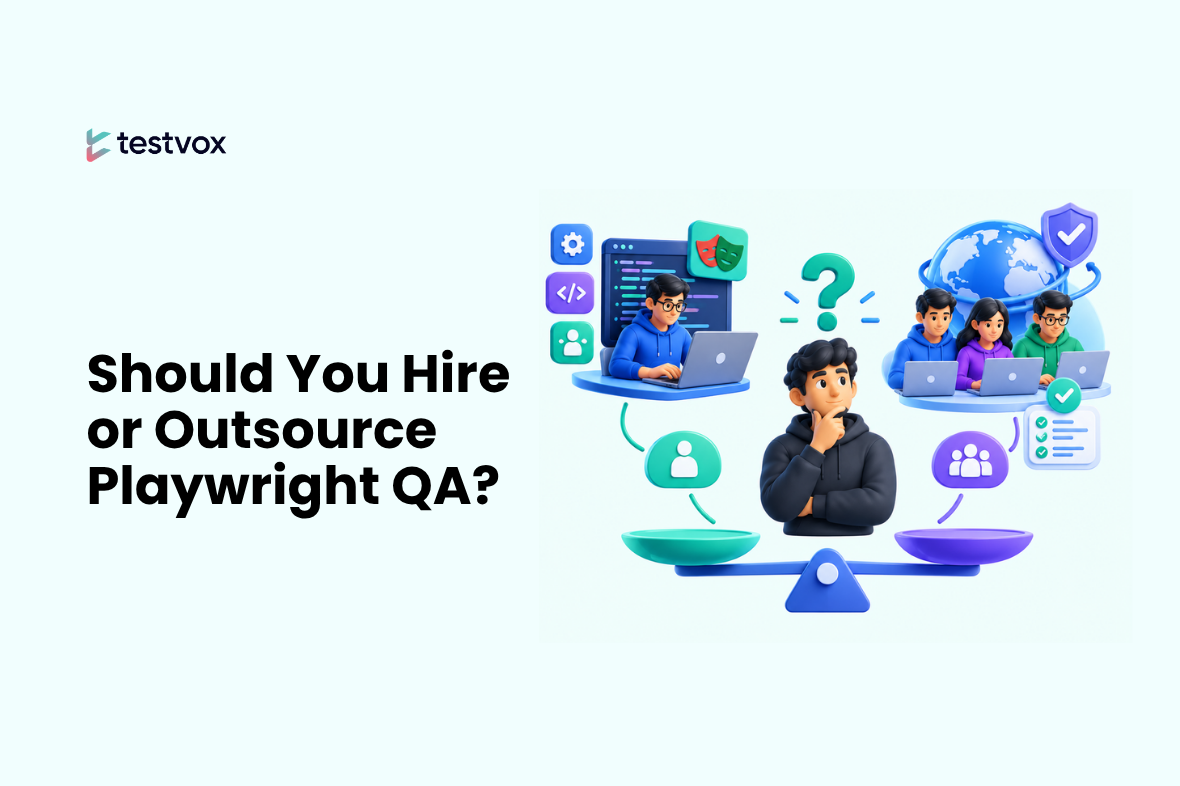
Hire a Playwright automation engineer in-house when automation is continuous, tightly coupled to your product architecture, and you can keep that person busy and growing for at least 18 months. Outsource to a QA partner when you need a working suite quickly, your automation load is uneven, or you cannot yet justify a full-time senior salary. Most teams under 25 engineers get better results from a partner for the first year and hire in-house once the framework is stable and the maintenance load is predictable.
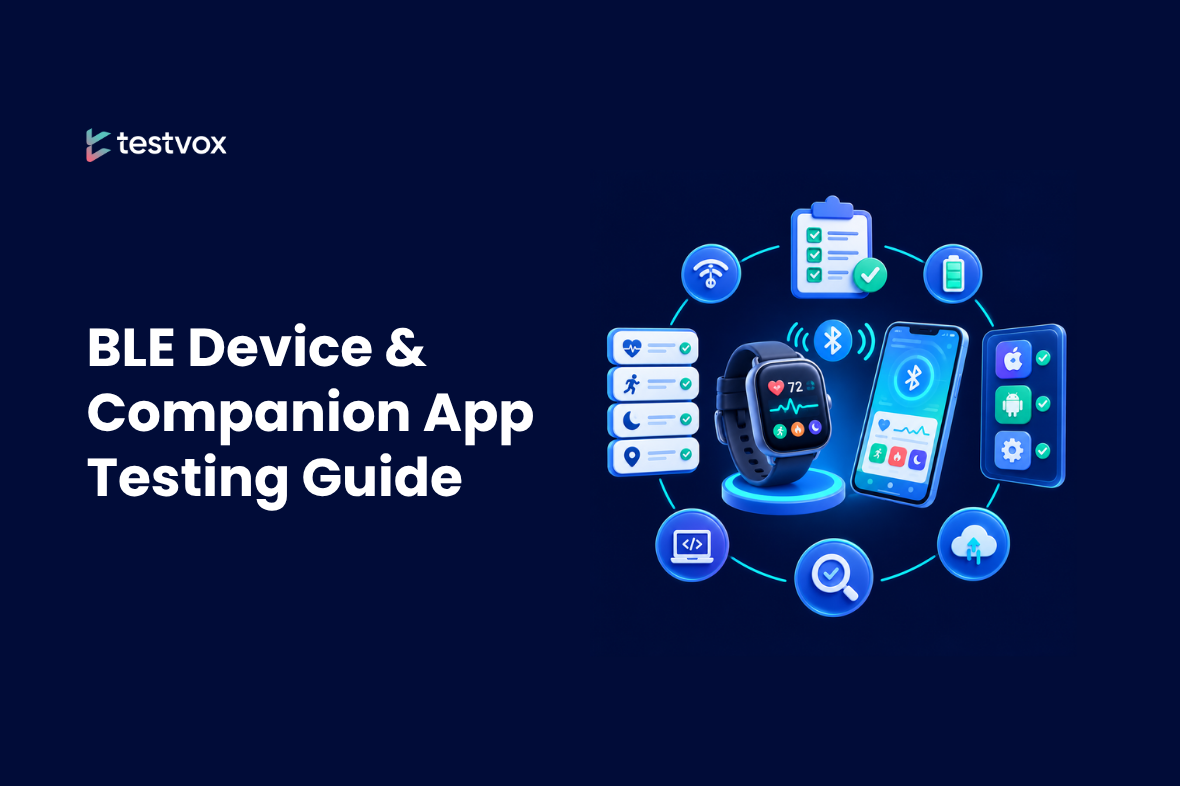
A practical BLE testing checklist covering pairing, reconnection, Android and iOS differences, firmware OTA updates, data sync, performance and UX for wearables and IoT devices.